Seed preparation
Clarkia seed is very fine. Mix it with a little dry sand and sprinkle it thinly along shallow drills or over a raked patch so you can thin seedlings easily later.
 Shop at deodar-seeds.com Free EMS courier delivery across India

Flower growing guide
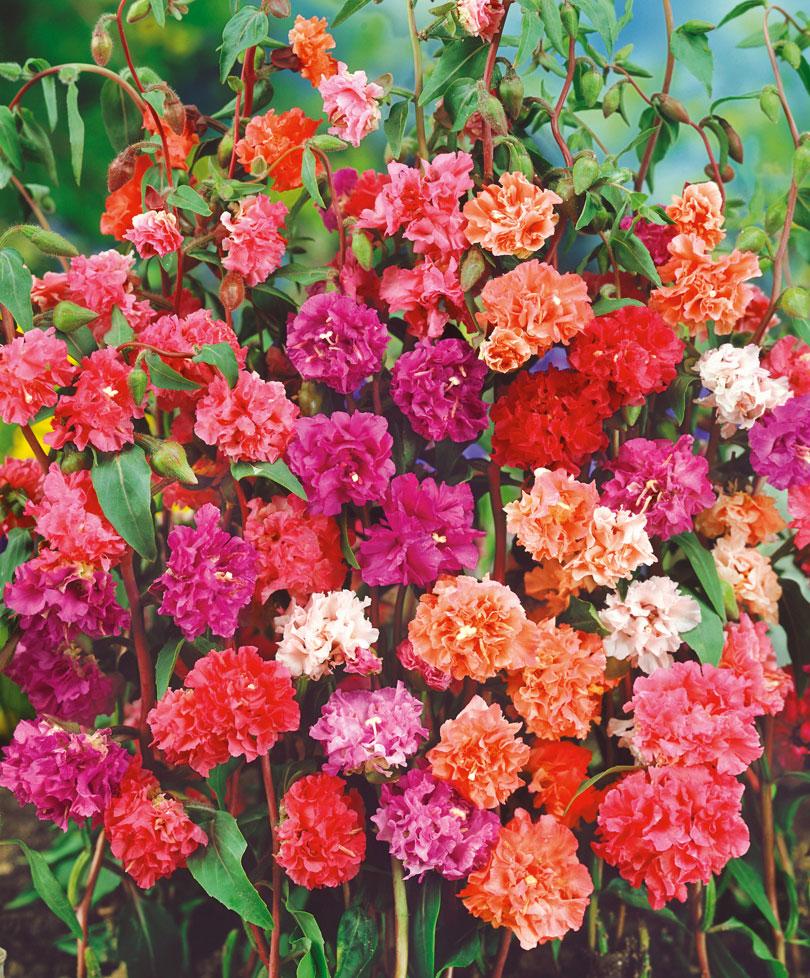
Clarkia is a cool-season annual from California with tall spikes of ruffled double flowers that are excellent for cutting. It dislikes transplanting, so the best results come from sowing directly where it will flower while the weather is cool.
Clarkia seed is very fine. Mix it with a little dry sand and sprinkle it thinly along shallow drills or over a raked patch so you can thin seedlings easily later.
Not needed. The seed absorbs water readily.
Not needed. Clarkia germinates in cool, moist soil without a cold treatment; sowing in the cool season is enough.
Not needed, and soaked fine seed is hard to sow evenly.
A university seed chart gives about 21 °C (70 °F) for the closely related godetia (Clarkia amoena) in trays, followed by cool growing. Outdoors, sow when the soil is cool and moist rather than in summer heat.
Sow on the surface and press the seed into the soil, or cover with only a very thin layer of fine soil or vermiculite.
Light, sandy or loamy, well-drained soil of modest fertility, ideally slightly acid. Rich soil gives lots of leaves at the expense of flowers.
Keep the surface moist until seedlings appear. After that, let the soil dry a little between waterings; clarkia rots in wet, heavy ground.
NC State Extension lists clarkia seed as needing light, while a university seed chart covers godetia seed lightly. Both agree on very shallow sowing: never bury the seed.
About 10 days in trays at 21 °C; outdoors in cool soil it can take longer.
Avoid it where possible. If you must start seed indoors, sow two or three seeds into each small pot or cell and plant the whole root ball out young, without disturbing the roots.
Thin direct-sown seedlings in stages to about 20-25 cm (8-10 in) apart. Crowded plants are weak and more prone to rot and mildew.
Plants grow 0.5-1 m tall. Push in twiggy supports early, because some double varieties have weak stems that bend under the weight of the flowers.
Clarkia likes cool nights. In the Indian plains sow in the cool season after the monsoon for late-winter and spring flowers; in the hills and in cold-winter climates sow in early spring, or in autumn where winters are mild.
Grow in full sun or light partial shade. A little shade in the afternoon can help in warmer areas.
Cut stems when the first few flowers on the spike have opened; the remaining buds continue to open in water.
Clarkia unguiculata has slender spikes of small ruffled flowers, while godetia (Clarkia amoena) has larger, cup-shaped satin flowers. Both are grown the same way.
Sow double clarkia directly in a sunny bed for frilly cool-season spikes that are lovely in the garden and the vase.
It is better sown where it will flower, because it dislikes root disturbance. If you start it indoors, use small cells and plant out young seedlings with an undisturbed root ball.
Only barely. Press the fine seed onto moist soil or cover it with a light dusting; deep sowing reduces germination.
They are related species in the same genus. Godetia is Clarkia amoena; the double 'clarkia' sold in mixes is usually Clarkia unguiculata, once called Clarkia elegans.
Usually because the soil stays wet. Clarkia needs light, well-drained soil; let it dry a little between waterings and give plants space.