Seed preparation
Pampas grass seed is tiny and comes wrapped in fluffy hairs. Rub the plume material gently between your fingers over a sheet of paper and sow the fine seed with any remaining fluff; do not try to clean it perfectly.
 Shop at deodar-seeds.com Free EMS courier delivery across India

Flower growing guide
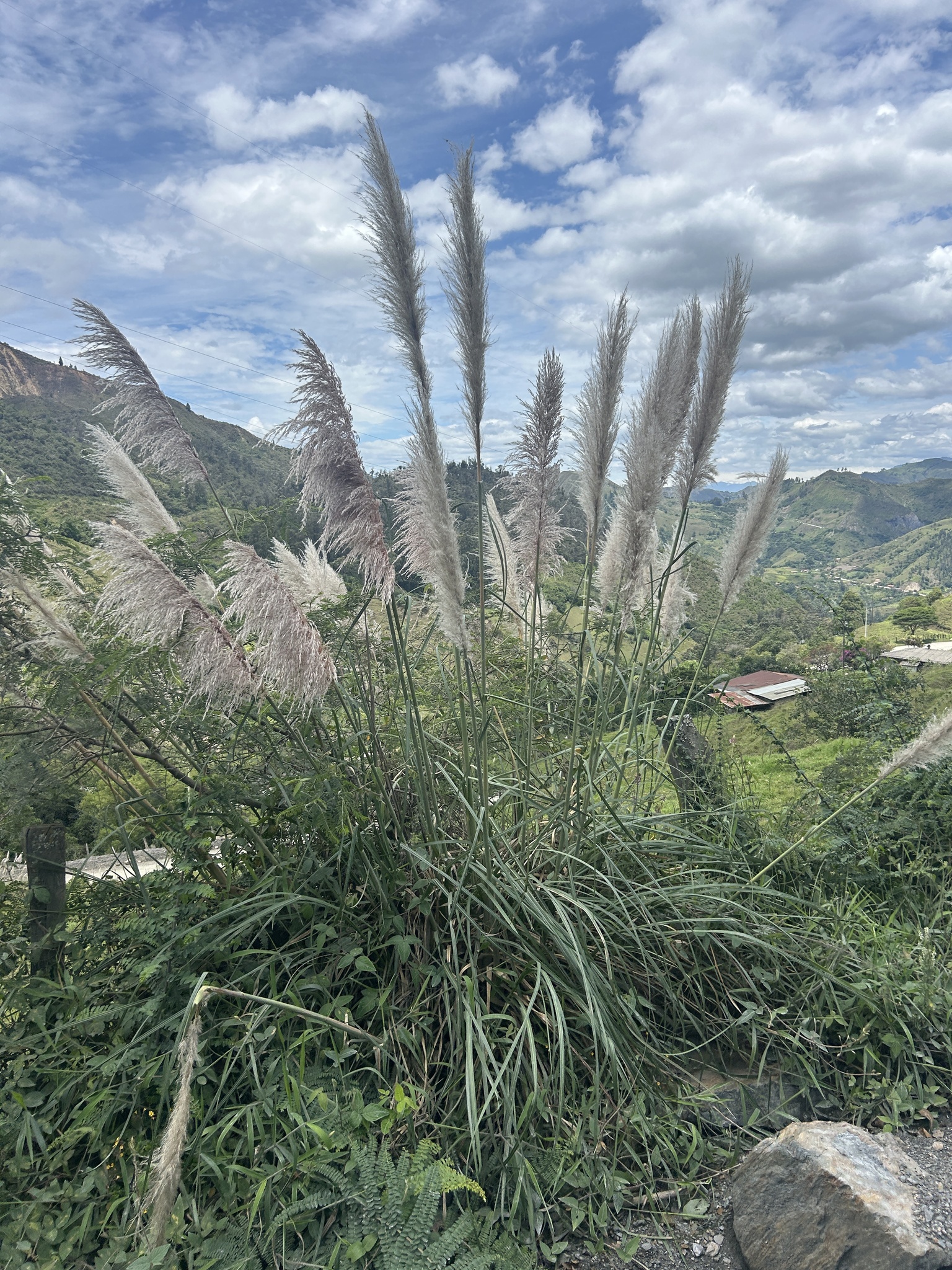
Cortaderia nitida is a large Andean pampas grass forming tussocks up to about 2.3 m with silky plumes. Seed data for this species are scarce, so this guide uses germination figures from the closely related common pampas grass and says clearly where it does.
Pampas grass seed is tiny and comes wrapped in fluffy hairs. Rub the plume material gently between your fingers over a sheet of paper and sow the fine seed with any remaining fluff; do not try to clean it perfectly.
Not needed. No hard seed coat is reported for Cortaderia.
Not needed. Studies on C. selloana report germination without cold treatment; there is no published evidence that C. nitida needs it either.
Not needed. The seed is too small and fluffy to soak usefully; moist compost is enough.
No figures exist for C. nitida. For C. selloana, a 2024 study found the best germination at 22 °C by day and 12 °C at night, with a minimum of about 10 °C (Lazaro-Lobo et al.), and the Jelitto culture sheet recommends about 20 °C (68 °F). Avoid hot conditions above this range while seed is germinating.
Scatter the seed on fine, moist seed compost, press it in and cover it only very thinly with sieved compost or vermiculite, as recommended for C. selloana.
A free-draining seed compost in trays. For C. selloana, seedlings grew best in very moist soil, so keep the compost consistently damp.
Keep the compost constantly moist but not flooded; covering the tray with glass or clear film helps.
No light-versus-darkness data were found for Cortaderia. Because the seed is very small, sow it at or just below the surface where some light can still reach it; never bury it deeply.
Jelitto gives 3-4 weeks from sowing to germination for C. selloana. Expect C. nitida to be similar or slower, and keep trays moist for at least a month before giving up.
After germination, keep seedlings slightly cooler (Jelitto). When they are large enough to handle, prick them out singly into small pots and grow them on until they form a solid root ball.
Plant young plants in their final position while still small. A mature tussock can be over 2 m tall and wide, so leave plenty of room and keep it away from paths, as the leaf edges are rough.
Seedlings grow slowly at first and usually take more than one season to form a flowering clump. Water regularly in dry weather while they establish.
C. nitida grows wild from Costa Rica to Peru; one of its local names, sigse de paramo, points to the high Andean grasslands. Most garden pampas grass is the Argentinian C. selloana, a different species.
Common pampas grass (C. selloana) and jubata grass (C. jubata) are serious invasive weeds in places such as California and northern Spain: each plume can carry up to 100,000 wind-blown seeds (Cal-IPC). No invasiveness record exists for C. nitida, but cutting plumes before they ripen is a sensible precaution near natural land.
There are no published growing trials for this species in India. Given its Andean origin, it is more likely to be happy in cooler hill gardens with full sun and good drainage. In hot, humid plains, treat it as an experiment and start seed in the cooler months.
Pampas grass leaves have sharp, rough edges. Wear gloves and long sleeves when tidying or dividing clumps.
Grow Andean pampas grass from seed for a striking tussock topped with silky plumes.
No. Common pampas grass is Cortaderia selloana from Argentina and nearby countries. C. nitida is a separate Andean species from Costa Rica to Peru with tussocks up to about 2.3 m.
For common pampas grass, about 3-4 weeks at around 20 °C. There are no published figures for C. nitida, so keep the trays moist for at least a month.
Common pampas grass and jubata grass are invasive in several regions because their plumes release huge numbers of wind-blown seeds. There is no such record for C. nitida, but cutting plumes before they ripen is a good precaution.
Only very thinly. The seed is tiny, so press it onto moist compost and add just a light dusting of fine compost or vermiculite.