 Shop at deodar-seeds.com
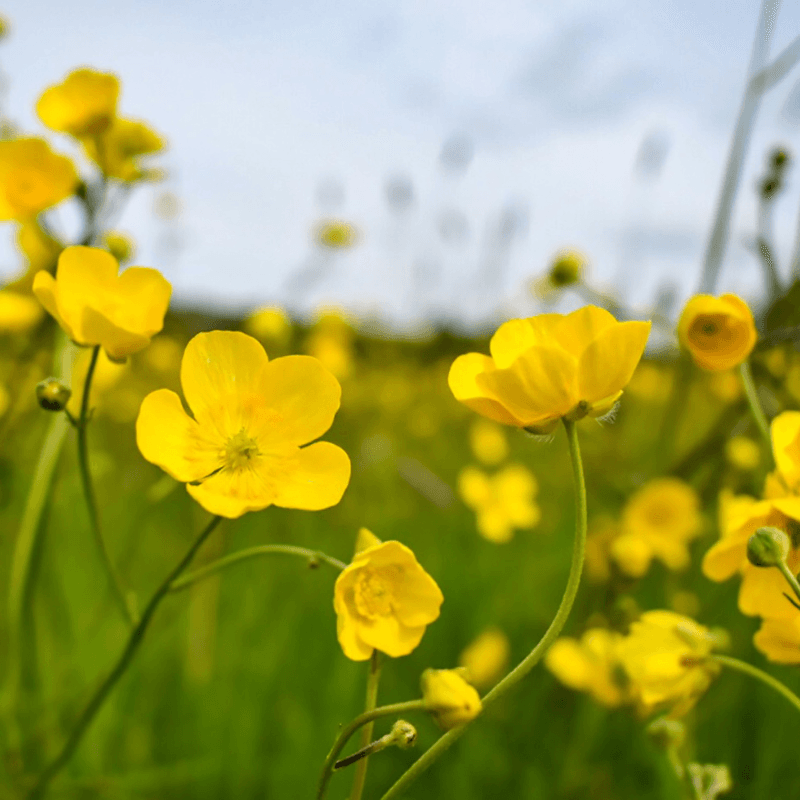
About this seed
Chinese buttercup (Ranunculus cantoniensis) is an Asian buttercup also listed under the synonym Hecatonia pilosa. In India it grows on grassy slopes and as a weed of irrigated fields at roughly 1,000–2,500 m, and, like other buttercups, its sap can irritate skin.
Also known as: Chinese buttercup, Canton buttercup, Hecatonia pilosa (synonym of Ranunculus cantoniensis).
Names and range
The species was described by de Candolle in 1824 and has many synonyms, among them Hecatonia pilosa, the name used in this listing. It occurs across South, South-East and East Asia, from the Himalayan region through Myanmar and Indochina to China, Taiwan and Japan.
Handling: buttercup sap
Buttercups (genus Ranunculus) contain protoanemonin, released from the glycoside ranunculin. Contact with cell sap can cause skin redness, burning and blisters, and eating the plant causes burning of the mouth, abdominal pain and vomiting. This is genus-level information; we hold no species-specific toxicity data, so handle the plant with gloves and keep it away from pets and livestock.
Sowing
- Sow in a clean, well-drained medium.
- Keep moisture steady during germination and avoid waterlogging.
- Move seedlings gradually into stronger light.
We have no sourced germination temperature, emergence time or sowing depth for this species and do not state one.
FAQ
Are Hecatonia pilosa and Ranunculus cantoniensis the same plant?
Hecatonia pilosa is listed as one of the synonyms of Ranunculus cantoniensis, which is the name we use for the species.
Is Chinese buttercup a culinary herb?
We make no culinary claim. Buttercups contain protoanemonin, an irritant compound, and this listing is for growing the plant and for seed collections.