 Shop at deodar-seeds.com
About this seed
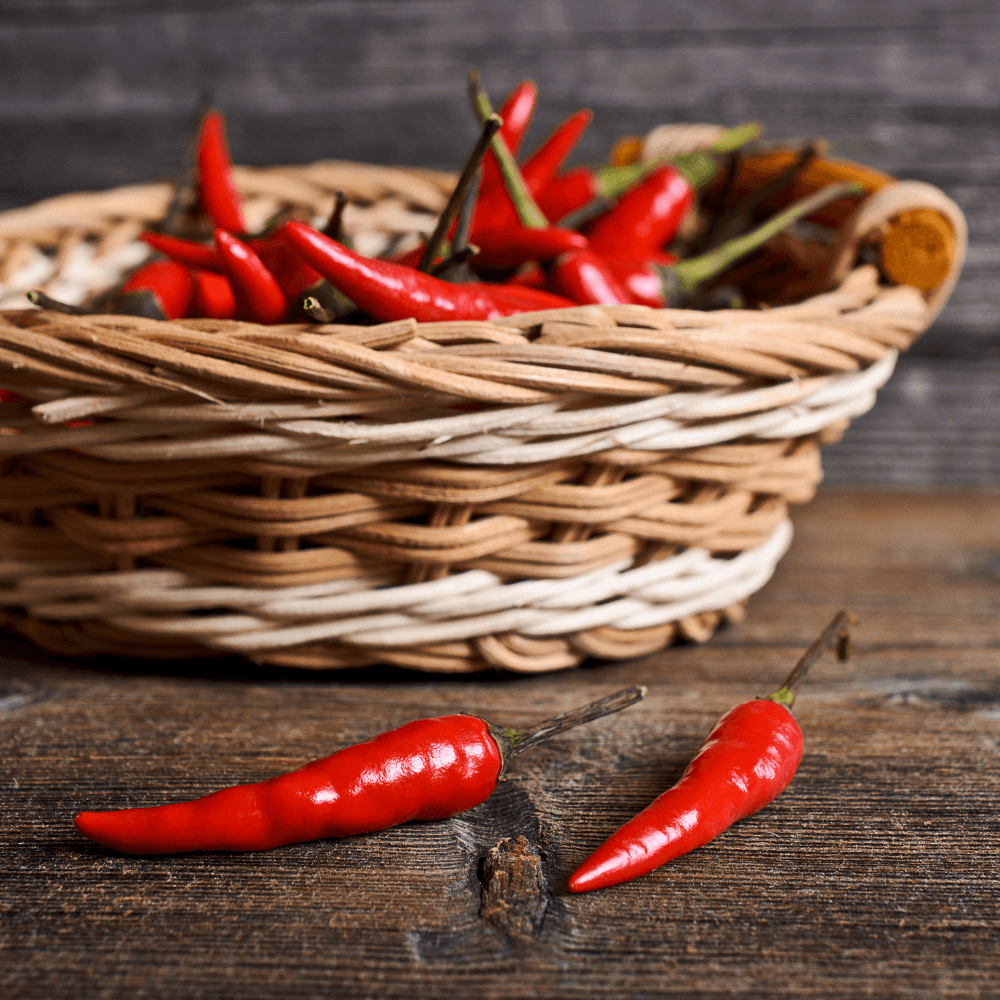
Cayenne Red is the classic thin red cayenne (Capsicum frutescens, family Solanaceae): 10–15 cm pods at 30,000–50,000 Scoville heat units, used fresh or dried and ground.
Fruit and plant
- Thin, elongated pods 10–15 cm (4–6 in) long, green turning bright red
- Plants grow about 60–90 cm (2–3 ft) tall
- Grown as an annual; perennial in frost-free climates
- Used in sauces, marinades, salsas, dry rubs, pickles and as dried chili powder
Sow into soil at 18–35 °C
Start the seed indoors 6–8 weeks before the last frost. Seedlings appear in about 8–9 days when the soil is 25–35 °C; 18–35 °C is the soil range that suits pepper germination, so keep the tray inside it until the first leaves show. Cover the seed with about 6 mm of seed-starting mix.
These figures are typical for the species (emergence was measured with seed about 13 mm deep); they are not a test of this lot.
Growing on
Transplant after the last frost, 45–60 cm (18–24 in) apart. Cayenne wants warm, sunny conditions of 21–29 °C, in well-drained, fertile soil at pH 6.0–7.0 that stays moist but not waterlogged. Use a balanced fertiliser during leafy growth and one higher in potassium and phosphorus once fruit sets. In windy spots, give each plant a light stake.
Harvest and use
Pick pods green or red; for full flavour and heat, wait until they are bright red. Use them fresh, dry them, or freeze them.
Pepper seed usually stays usable for about 2 years when kept cool, dark and dry, so you can sow some and keep the rest. That is a general figure for the species; we do not state a germination percentage.
FAQ
Will it come back next year?
Only where there is no frost. Elsewhere cayenne is grown as an annual and resown each spring.
How many seeds should I sow at a time?
Sow two or three at a time and keep the rest; how many grow depends on your conditions, and we do not state a germination percentage.