 Shop at deodar-seeds.com


About this seed
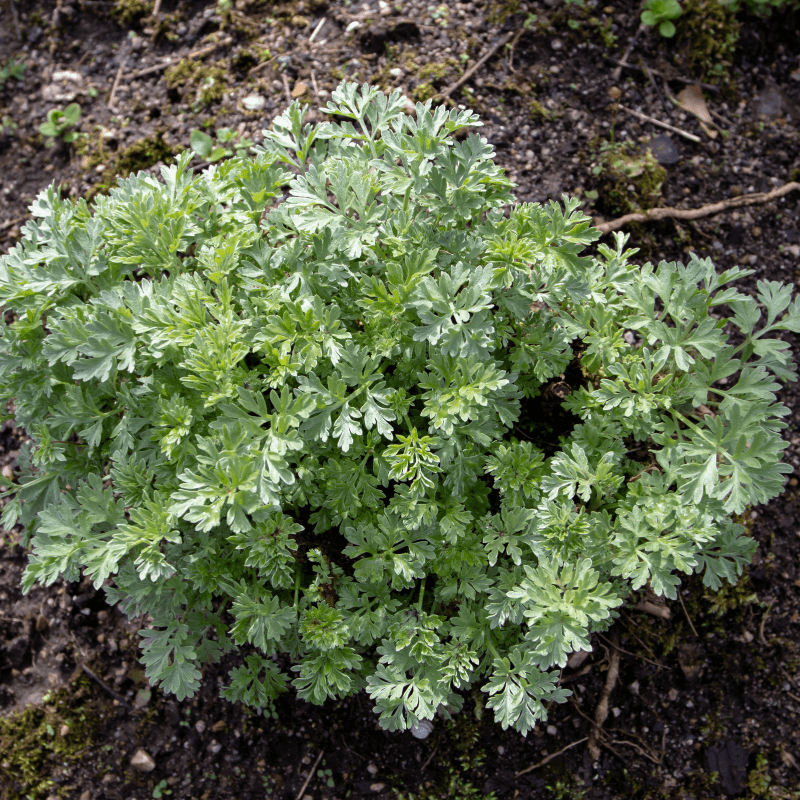
Common wormwood (Artemisia absinthium) is an upright, deciduous herbaceous perennial in the daisy family (Asteraceae) with finely divided, aromatic grey-green leaves. Its seed needs light to germinate, so it is pressed onto the surface and left uncovered.
Also known as: Grand wormwood, Absinthe wormwood, Vilayati afsanteen, Afsantin, Ajenjo (Spanish), Grande absinthe (French), Wermut (German), Assenzio (Italian), Losna (Portuguese), Polyn gorkaya.
What the plant becomes
Typically 0.8–1.2 m tall, rarely over 1.5 m, with insignificant yellowish flowers in late summer. It is native to North Africa and temperate Eurasia and is rated hardy to about −20 °C (RHS H6; US zones 3–9).
Growing steps
- Sow on the surface of moist, well-drained mix at about 20 °C; press the seed in and do not cover it.
- Expect germination in roughly 14–21 days at that temperature.
- Keep the mix moist but not waterlogged until seedlings are established.
- Plant out about 45–60 cm apart in sun, in well-drained ground.
When it does not work
- Seed buried: covering the seed cuts off the light it needs.
- Heavy, poorly drained soil: plants can die back.
Plant identification
Do not confuse it with sweet wormwood (Artemisia annua), an annual. Common wormwood is a woody-based perennial that returns each year. We make no culinary or medicinal claims.
FAQ
Can wormwood stay outdoors through winter?
In the hardiness range above, yes. It is deciduous, so the top growth dies back and new shoots follow.
What soil does it tolerate?
Sand, loam or chalk, acid to alkaline (reported pH 4.8–8.2), including dry or poor ground, provided it drains.