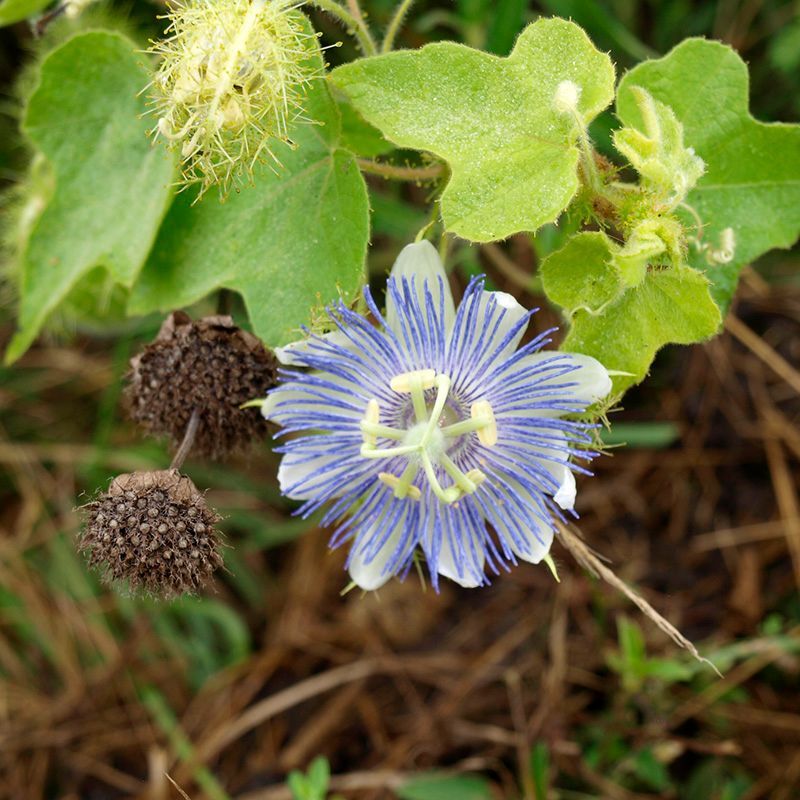
Seed preparation
Collect seed from well-ripened fruit, wash off the pulp and dry it. A hard seed coat makes germination poor and uneven if the seed is sown without soaking.
 Shop at deodar-seeds.com Free EMS courier delivery across India

Climber growing guide
Stinking passionflower is a fast-growing tropical climber. Its hard-coated seed germinates in about one to two weeks after a 24-hour soak in warm conditions.
Collect seed from well-ripened fruit, wash off the pulp and dry it. A hard seed coat makes germination poor and uneven if the seed is sown without soaking.
Not needed. In a Sri Lankan trial, a brief 70 °C hot-water dip (10 seconds) gave no more germination by day 8 than soaked, untreated seed (about 62% each). The same trial raised germination to about 79% by soaking seed for 24 hours in gibberellic acid (400 mg/L). That is optional; a plain water soak works.
Not needed. This is a tropical species and germinates without cold.
Soak the seed in tepid water for 24 hours to soften the tough coat, then sow straight away.
Keep the sown pots covered and warm at about 25 °C (77 °F) until seedlings appear. In India and similar climates, sow in the warm season.
Cover the seed with a thin layer of compost, about its own thickness.
Peat-free seed compost, or a 1:1 mix of sand and topsoil. In the Sri Lankan trial, topsoil and the sand-topsoil mix gave better germination than pure sand.
Keep the compost evenly moist. A clear lid or bag keeps humidity and warmth even; remove it when seedlings appear.
Seed germinates under its cover. Give seedlings bright light at once.
In the Sri Lankan nursery trial, soaked seed reached 50% germination in 8-10 days, and 62-79% had germinated by day 8 depending on treatment. Expect one to two weeks in warm conditions.
Pot seedlings individually once they have a few true leaves and can be handled.
Plant out after any risk of cold has passed, in a sunny, sheltered position in fertile, well-drained soil. Put up a trellis or horizontal wires first; the plant climbs by tendrils.
Guide the first shoots onto the support. Growth is fast in warm weather, and plants flower and fruit in the same season.
Tendrils need something thin to grip: wires, netting or a trellis, ideally in a spot sheltered from cold, drying winds.
If plants survive into a second season, prune in early spring, removing old flowered stems. Flowers form on new growth.
Seed-grown passionflowers may differ from the parent plant in vigour and flower detail.
Because it is introduced and weedy in India and Sri Lanka, keep it in the garden and do not discard fruit or seed in natural areas.
Soak stinking passionflower seed overnight, sow it warm and give the vine a trellis to climb.
Yes. Soak them in tepid water for 24 hours to soften the hard coat, then sow and keep them covered at about 25 °C.
In a warm tropical nursery trial, 62-79% germinated by day 8, depending on treatment.
No. Passion fruit is Passiflora edulis; it has its own Deodar guide. P. foetida is a different, smaller annual or biennial climber.
It is a climbing annual or biennial, so plan to resow rather than keep one plant for years.